

Description
Same active ingredient (levalbuterol) as Xopenex®, the US brand. Levolin Respules 1.25 mg is an Indian brand, made and licensed in India. Compare all Levalbuterol (Generic Xopenex) options.
About Levolin Respules 1.25 mg
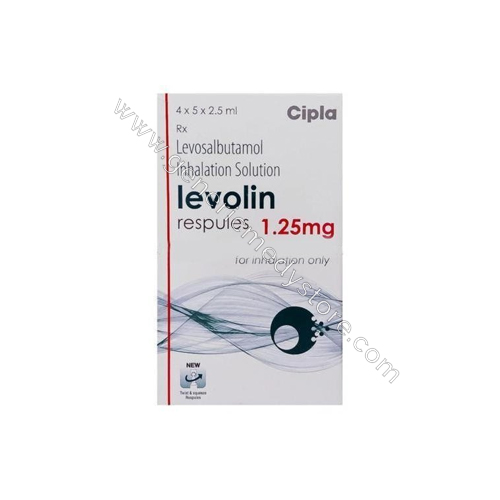
Levolin Respules 1.25 mg is a prescription nebulizer solution containing 1.25 mg of levalbuterol (levosalbutamol) per single-use ampoule, made by Cipla Limited, used to treat bronchospasm in adults and adolescents with more severe asthma or COPD. It is the strongest Levolin respule: four times the 0.31 mg children’s strength and double the usual 0.63 mg adult starting dose.
Who needs the 1.25 mg strength?
For people aged 12 and older, the labeled starting dose of nebulized levalbuterol is 0.63 mg three times a day, every 6 to 8 hours. Patients with more severe asthma who do not respond well enough to 0.63 mg may be moved up to 1.25 mg three times a day. Because side effects increase with dose, this strength is used under medical supervision and is not intended for children under 12.
How does it work?
Levalbuterol is the active form of albuterol (salbutamol), a short-acting beta-2 agonist. The nebulizer’s compressor converts the solution into a mist that deposits throughout the airways, where the drug relaxes the constricted muscle and lets the tubes open again. Improvement is usually felt within minutes. A nebulizer is especially useful when someone is too breathless to coordinate an inhaler.
How to nebulize Levolin 1.25 mg
- Check the respule is intact and the liquid is clear and colorless; do not use it if it looks cloudy or discolored.
- Twist the top off one respule and empty the entire contents into the nebulizer chamber.
- Connect the chamber, tubing and compressor, and attach a mouthpiece (preferred for adults) or a mask.
- Sit upright, seal your lips around the mouthpiece and breathe slowly and deeply through your mouth until the chamber is empty, about 5 to 15 minutes.
- Rinse the chamber and mouthpiece after each treatment, let them air dry, and replace parts as the maker advises.
Warning signs of a severe flare
If you need more treatments than prescribed, or a treatment gives little or short-lived relief, your condition may be deteriorating quickly. Call emergency services for severe breathlessness, difficulty finishing sentences, blue or gray lips, confusion or unusual drowsiness. Do not keep repeating nebulizer doses at home in place of emergency care.
What are the side effects?
- Tremor, nervousness, dizziness and headache.
- A fast heartbeat or palpitations, and occasionally changes in blood pressure.
- Low potassium and higher blood sugar, particularly with repeated doses.
- Rarely, paradoxical bronchospasm or an allergic reaction (rash, hives, swelling): stop and seek urgent help.
Cautions and interactions
Discuss heart disease, abnormal heart rhythms, high blood pressure, hyperthyroidism, diabetes and seizure disorders with your doctor. Non-selective beta-blockers can block the medicine’s effect. Diuretics, oral steroids and theophylline increase the risk of low potassium, and MAO inhibitors or tricyclic antidepressants can amplify effects on the heart and blood vessels. Avoid using another short-acting bronchodilator at the same time unless directed. In pregnancy or breastfeeding, your doctor will weigh the benefits against possible risks.
Pack sizes and storage
Strips of 5 respules, sold in packs of 20, 40 or 60, from $8.30. Keep them in the foil pouch or carton below 86°F (30°C), away from light and frost, and use each opened respule at once.
Frequently asked questions
Will I always need the 1.25 mg respules?
If symptoms settle, your doctor may switch you to Levolin Respules 0.63 mg.
Can it be combined with ipratropium?
Ready-mixed options exist, such as Duolin Respules; only combine medicines in the nebulizer if your doctor tells you to.
What about daily prevention?
Relievers do not control airway inflammation. Ask about preventers such as Budecort Respules, or browse the respiratory range.
For information only; follow your own doctor’s instructions. Levolin Respules 1.25 mg is a prescription medicine for adults and adolescents.
Helpful guides
- Asthalin vs Ventolin: Are These Albuterol Inhalers the Same?Asthalin vs Ventolin: both are 100 mcg salbutamol reliever inhalers. Compare makers, licensing, dosing, technique and when needing your reliever is a…
- Types of Asthma Inhalers: Relievers, Preventers and How to Use Them CorrectlyLearn the types of asthma inhalers (relievers, preventers and combination inhalers), how each one works, and step-by-step tips for correct inhaler technique.