


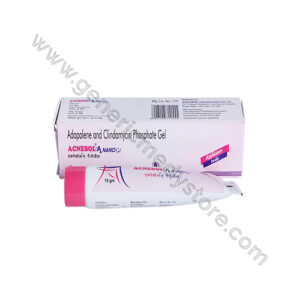
Description
Same active ingredient (clindamycin) as Cleocin T®, the US brand. Acnesol Gel 1% is an Indian brand, made and licensed in India.
About Acnesol Gel 1%
Acnesol Gel 1% is a prescription topical gel containing clindamycin phosphate equivalent to 1% clindamycin, made by Systopic Laboratories Pvt Ltd, used to treat inflammatory acne vulgaris, the red bumps and pus-filled spots that appear on the face, chest and back. Each tube holds 20 g of gel.
How does Acnesol Gel 1% work?
Clindamycin is a lincosamide antibiotic. Once it soaks into the hair follicles, it attaches to the bacterial ribosome and stops Cutibacterium acnes from making the proteins it needs to multiply. Fewer bacteria mean fewer of the irritating fatty acids and immune signals that turn a blocked pore into a swollen, tender pimple. It has little direct effect on blackheads and whiteheads, which is why it is often prescribed alongside a retinoid or benzoyl peroxide.
How to use Acnesol Gel 1%
- Apply a thin film twice a day, morning and evening, to the whole area where spots tend to appear.
- Cleanse gently first and let the skin dry completely, as gel on damp skin stings more.
- Spread it lightly rather than rubbing hard, and avoid the eyes, mouth and inside of the nostrils. If gel gets into an eye, rinse with plenty of cool water.
- Let it dry before applying makeup or sunscreen, and choose products labeled non-comedogenic.
- If you miss an application, simply use the next one at the usual time.
Why it is best paired with benzoyl peroxide
Relying on a topical antibiotic alone for months encourages resistant strains of C. acnes, which can make clindamycin and erythromycin less effective later. US dermatology guidelines therefore recommend combining it with benzoyl peroxide, which kills bacteria without driving resistance. A practical routine is a benzoyl peroxide wash such as Brevoxyl Creamy Wash before your morning application, or a ready-mixed product such as Clindoxyl Gel. Where blackheads are also a problem, a doctor may add a nightly retinoid; Acnesol A Nano Gel combines clindamycin with adapalene in one tube.
How long does it take to work?
Most people notice fewer new inflamed spots within 4 to 6 weeks, with the best results after about 12 weeks of regular use. If there is no clear improvement by then, ask your doctor to reassess rather than carrying on unchanged. Once acne is under control, many plans stop the antibiotic and keep a retinoid or benzoyl peroxide for maintenance, which helps prevent relapse without feeding resistance.
What are the side effects?
The gel is usually well tolerated. Dryness, mild peeling, redness, itching, burning or an oily feel can occur where it is applied, and allergic contact dermatitis is uncommon. A small amount of clindamycin passes through the skin, and rare cases of diarrhea and colitis have been reported. Stop using it and seek medical advice for severe or persistent diarrhea, stomach cramps or blood in the stool, even if this starts weeks after your last application.
Who should not use Acnesol Gel 1%?
Avoid it if you are allergic to clindamycin or lincomycin, or have a history of inflammatory bowel disease or colitis linked to antibiotics. Do not use it at the same time as topical erythromycin, as the two drugs compete for the same bacterial target. Little of the drug reaches the bloodstream, and topical clindamycin is often used in pregnancy when needed, but confirm this with your doctor; while breastfeeding, keep it off the nipple area. Safety in children under 12 has not been established.
Pack sizes and storage
Sold in packs of 3, 6 or 9 tubes, from $20. Store below 77°F (25°C) with the cap closed, and do not freeze.
Frequently asked questions
Can I use it on my back and chest?
Yes, if your doctor agrees. Clindamycin does not bleach fabric, but benzoyl peroxide does, so wear old clothes and use white towels if you combine them.
Will it clear acne scars or dark marks?
No. It treats active spots; marks left behind fade slowly with time, sun protection and other treatments your doctor may suggest.
Where can I see other acne treatments?
Browse the acne category.
General information only, not medical advice. Acnesol Gel 1% is a prescription antibiotic; ask your doctor or pharmacist how it fits with your other skin products.