


Description
About Azifast Gel
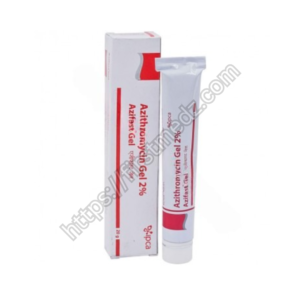
Azifast Gel is a prescription topical gel containing the antibiotic azithromycin, made by Ipca Laboratories, used on the skin to treat inflamed acne, such as red papules and pus-filled spots, in which bacteria play a part. It comes in a 20 g tube, and the exact strength is printed on the tube and carton.
How does Azifast Gel work?
Acne develops when oil and dead skin cells block pores and the skin bacterium Cutibacterium acnes multiplies inside them, triggering inflammation. Azithromycin applied to the skin reduces these bacteria and also has a calming, anti-inflammatory action. It does little for blackheads and whiteheads, however, because it does not unblock pores, which is why it is normally paired with another acne treatment.
Regulatory status
Topical azithromycin gels are made and prescribed in India, but they are not licensed for acne in the UK, EU or US, where the topical antibiotics used for acne are clindamycin and erythromycin. Published evidence for azithromycin gel comes from relatively small studies. A doctor or pharmacist can advise whether it is a sensible choice for you.
How to use Azifast Gel
- Wash the area with a mild cleanser and pat it dry.
- Squeeze out a small amount and spread a thin film over the whole area prone to spots, not only on individual pimples.
- Keep it away from the eyes, lips, inside the nose and any broken or sunburnt skin.
- Wash your hands afterwards and let the gel dry before applying moisturizer, sunscreen or make-up.
- Use it as often as your prescriber or the pack directs, usually once or twice a day.
How long does it take to work?
Expect to wait six to eight weeks before judging the result, as spots fade gradually. UK acne guidance advises reviewing a topical antibiotic at around 12 weeks and not relying on one alone for long periods, because prolonged exposure encourages resistant bacteria. Using benzoyl peroxide or a retinoid alongside it, as your doctor advises, helps keep resistance in check.
What are the side effects?
Local reactions are the most likely: dryness, redness, stinging or burning, itching and flaking where the gel is applied. These often settle as the skin adjusts, and a thinner layer or less frequent application can help. Stop using it and seek advice if you develop a spreading rash, hives, swelling of the face or eyes, or severe irritation.
Who should not use it?
Do not use it if you are allergic to azithromycin, erythromycin or other macrolides. It is not for use in or around the eyes: eye infections need a sterile eye preparation such as Azithral Eye Ointment. Only a small amount is likely to be absorbed through the skin, but ask your doctor before using it during pregnancy or while breastfeeding. Avoid combining it with an oral antibiotic for acne unless your prescriber has planned this.
Pack sizes and storage
Each 20 g tube is sold singly or in packs of 3, 6 or 12, from $9.05. Replace the cap after use and store below 86°F (30°C); do not freeze.
Frequently asked questions
Can I use it with tretinoin?
Often, yes, with one applied in the morning and the other at night, if your doctor agrees. Our guide to tretinoin for acne explains how retinoids help unblock pores.
Will it clear blackheads?
Not on its own. Blackheads and whiteheads respond better to retinoids or benzoyl peroxide.
Where can I find related products?
Look through the More Product category.
General information only. Azifast Gel is a prescription medicine; ask a doctor or pharmacist whether it suits your skin before using it.