

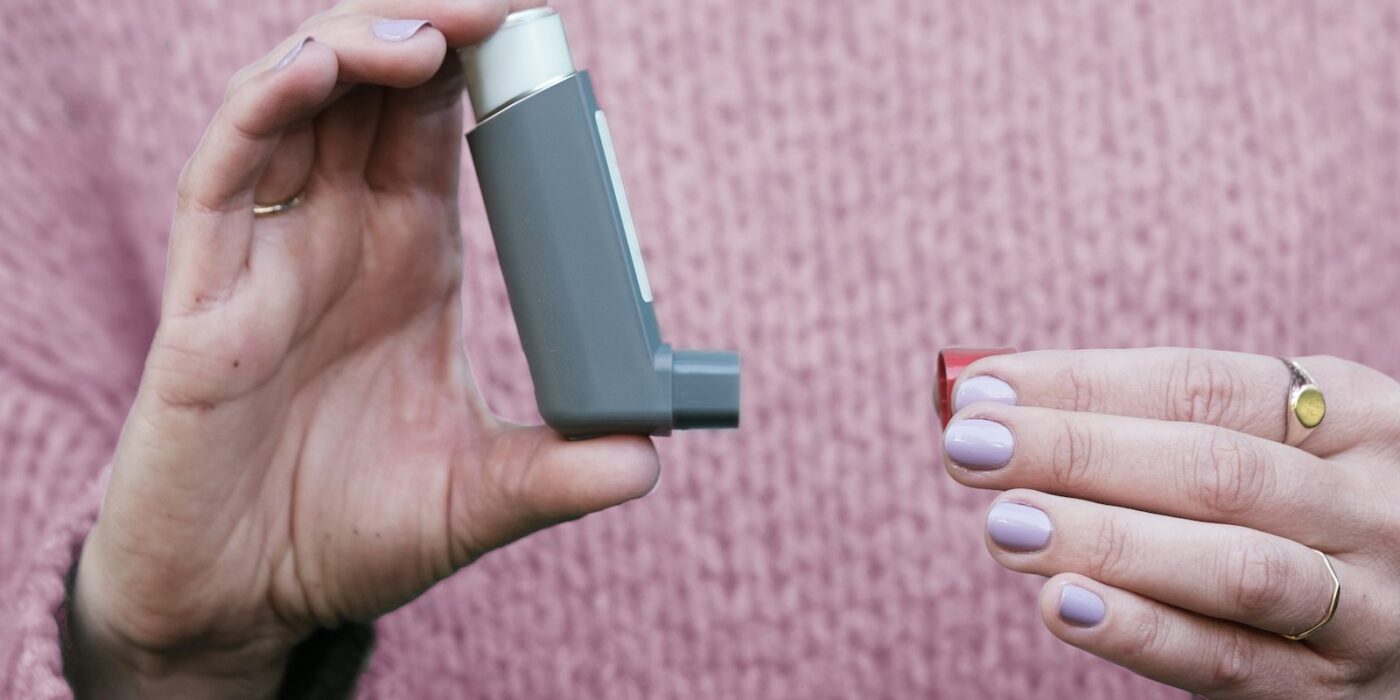
To use an inhaler with a spacer, shake the inhaler and push it into the end of the spacer. Breathe out, seal your lips around the spacer’s mouthpiece, press the inhaler once, then breathe in slowly and deeply and hold your breath for about 10 seconds. The spacer holds the spray for a moment, so more medicine reaches your lungs and less ends up in your mouth and throat.
What does a spacer actually do?
A spacer is a plastic or metal tube that fits between a metered-dose inhaler (the classic L-shaped “puffer”) and your mouth. Without one, the spray shoots out very fast, and much of it hits the back of your throat and gets swallowed instead of reaching your airways.
The spacer gives the mist room to slow down. Larger droplets settle on the walls of the tube instead of in your mouth, while the fine mist your lungs need floats inside for a few seconds as you breathe it in. You no longer have to press the canister and breathe in at exactly the same moment, which is the step most people get wrong.
Many spacers sold in the US are valved holding chambers. A one-way valve at the mouthpiece opens when you breathe in and closes when you breathe out, so you cannot blow the medicine back out. Some also whistle if you breathe in too fast.
Who benefits most from using a spacer?
Anyone who uses a metered-dose inhaler can use a spacer, adults included. It helps most in these situations:
- Children. Kids rarely time a puff and a breath correctly. In the UK, the NHS says a spacer is always recommended for children aged 15 and under who use a beclomethasone (beclometasone) aerosol inhaler. Babies and toddlers use one with a soft face mask.
- Steroid preventer inhalers. Inhaled steroids such as beclomethasone, budesonide and fluticasone can cause a hoarse voice and oral thrush (a yeast infection in the mouth). The NHS notes that spacers can lower the risk of these mouth and throat side effects and recommends one for anyone on high doses. Examples of steroid aerosols include Beclate Inhaler (beclomethasone) and Budecort Inhaler (budesonide), both made and licensed in India.
- Tricky timing. Many adults breathe in too early or too late without realizing it.
- Flare-ups. When you are short of breath, one long, deep breath is hard. With a spacer you can take several normal breaths instead, so a quick-relief inhaler such as albuterol (salbutamol), for example Asthalin Inhaler, still gets where it needs to go.
Spacers only work with pressurized metered-dose inhalers, like the aerosols in our asthma inhalers range. Dry-powder inhalers, such as capsule devices like a Rotahaler, and breath-activated inhalers are used on their own. Our guide to types of asthma inhalers explains the differences.

How do you use an inhaler with a spacer, step by step?
These steps follow the general advice from MedlinePlus. Also read the leaflets that came with your inhaler and spacer, because devices differ.
- Check the inhaler. Look at the dose counter and expiration date. Prime a new inhaler, or one you have not used for a while, as its leaflet directs.
- Shake and attach. Remove both caps, shake the inhaler well (MedlinePlus suggests 10 to 15 times), and push it firmly into the open end of the spacer.
- Breathe out. Sit or stand up straight and breathe out fully, away from the spacer.
- Seal. Put the mouthpiece between your teeth and close your lips tightly around it, chin slightly up.
- Press once to release one puff into the spacer.
- Breathe in right away, slowly and as deeply as you can. If that is hard, take several slow, normal breaths through the spacer instead, keeping your lips sealed.
- Hold. After a deep breath, remove the spacer and hold your breath for a count of 10, or as long as is comfortable. Breathe out slowly.
- One puff at a time. For another puff, shake again and repeat from step 3. With a quick-relief inhaler, MedlinePlus advises waiting about 1 to 2 minutes between puffs.
- Finish. Replace the caps. After a steroid inhaler, rinse your mouth with water, gargle and spit.
Speed matters. An expert review in npj Primary Care Respiratory Medicine notes that the mist stays floating in a spacer for less than 10 seconds and advises breathing in within about 3 seconds of pressing the canister.
How do you use a spacer with a mask for a baby or young child?
Babies, toddlers and many preschoolers cannot seal their lips around a mouthpiece, so they use a spacer with a soft mask. The American Lung Association describes the method, which in short is:
- Shake the inhaler, fit it into the spacer, and check the mask is firmly attached.
- Sit your child upright, for example on your lap, with their head supported.
- Place the mask over both nose and mouth so it seals with no gaps.
- Press the inhaler once and hold the mask in place while your child takes about six normal breaths, or for about 10 seconds.
- If a second puff is prescribed, wait about one minute, then shake and repeat.
- When you finish, wipe your child’s face with a damp cloth.
A calm child gets far more medicine than a crying one, because crying means short gasps and a poor seal. Let your child play with the spacer and mask beforehand and give doses when they are relaxed. Most children can move to a mouthpiece once they can seal their lips and follow the steps, often around age 4 or 5. Ask your child’s doctor when to switch, and about a second spacer for day care or school.
How do you clean a spacer?
Some makers say to wash the spacer weekly and others monthly, so follow the leaflet that came with yours. A typical routine:
- Take the spacer apart if it is designed to come apart, and soak the parts in warm water with a little mild dish soap.
- Do not scrub or towel-dry the inside. Let the parts air-dry standing upright. Rubbing builds up static, which makes medicine cling to the walls, and the review linked above recommends washing with detergent and air-drying for this reason.
- Some leaflets say to rinse off the soap and others say not to, since a thin soap film keeps static down. Follow your spacer’s instructions, and skip the dishwasher unless the maker allows it.
- Reassemble only when completely dry, and check that the valve sits flat and moves freely.
Replace the spacer as often as the maker recommends, and sooner if it cracks, the valve tears or sticks, or the mask no longer seals. Clean the inhaler’s own mouthpiece as its leaflet describes, and never put the metal canister in water.
What are the most common spacer mistakes?
- Spraying several puffs in at once. Extra puffs stick to the walls, so you get less medicine. One puff, breathe it in, then repeat.
- Breathing in too fast. If the chamber whistles, slow down.
- Not shaking before each puff, or not priming a new inhaler.
- A leaky seal around the lips or the edge of a mask.
- Skipping the mouth rinse after a steroid inhaler. A spacer lowers the risk of thrush, but rinsing still helps.
- Leaving the spacer at home. Flare-ups are exactly when you need it.
- Ignoring the dose counter. A spacer cannot help if the canister is empty.
When to see a doctor
Bring your inhaler and spacer to checkups and ask your doctor, nurse or pharmacist to watch your technique. Make an appointment if you need your quick-relief inhaler more than 2 days a week, symptoms wake you at night, you have hoarseness or white patches in your mouth that do not clear up, or your child keeps fighting the mask.
Call 911 or get emergency care right away if:
- Breathing is very hard or fast, or the skin between the ribs or at the base of the neck pulls in with each breath
- You or your child cannot speak in full sentences
- Lips or fingernails look blue or gray
- The quick-relief inhaler does not help, or relief wears off quickly
- Your child is unusually drowsy, confused or hard to wake
Frequently asked questions
Can I use any spacer with any inhaler?
Most spacers have a soft, universal opening that fits standard metered-dose inhalers, but check that the inhaler sits snugly with no gaps. Spacers do not work with dry-powder or breath-activated inhalers.
Do adults really need a spacer?
Not always. Adults with good technique can use a metered-dose inhaler on its own. A spacer is often advised for people who struggle with timing, take steroid inhalers or higher doses, or use a reliever during flare-ups.
Is a spacer as good as a nebulizer?
For many children and adults with asthma flare-ups, an inhaler with a spacer works about as well as a nebulizer and is quicker to use. Some people still need a nebulizer, and your doctor will decide what suits you.
Do I need a spacer with an albuterol inhaler?
It is not always required, but it helps many people, especially children and anyone using albuterol during an attack. If you use Asthalin, our Asthalin vs Ventolin comparison explains how it relates to the US brand.
This article gives general information and does not replace advice from your doctor or pharmacist. It is not medical advice. The inhalers mentioned in this article are prescription medicines and should be used under a doctor’s care, following the leaflet that comes with your device.
Shop the products in this article


Browse all Albuterol Inhalers (Generic Ventolin & ProAir) products →
Prescription medicines: check with your doctor or pharmacist that a treatment is right for you before ordering.