
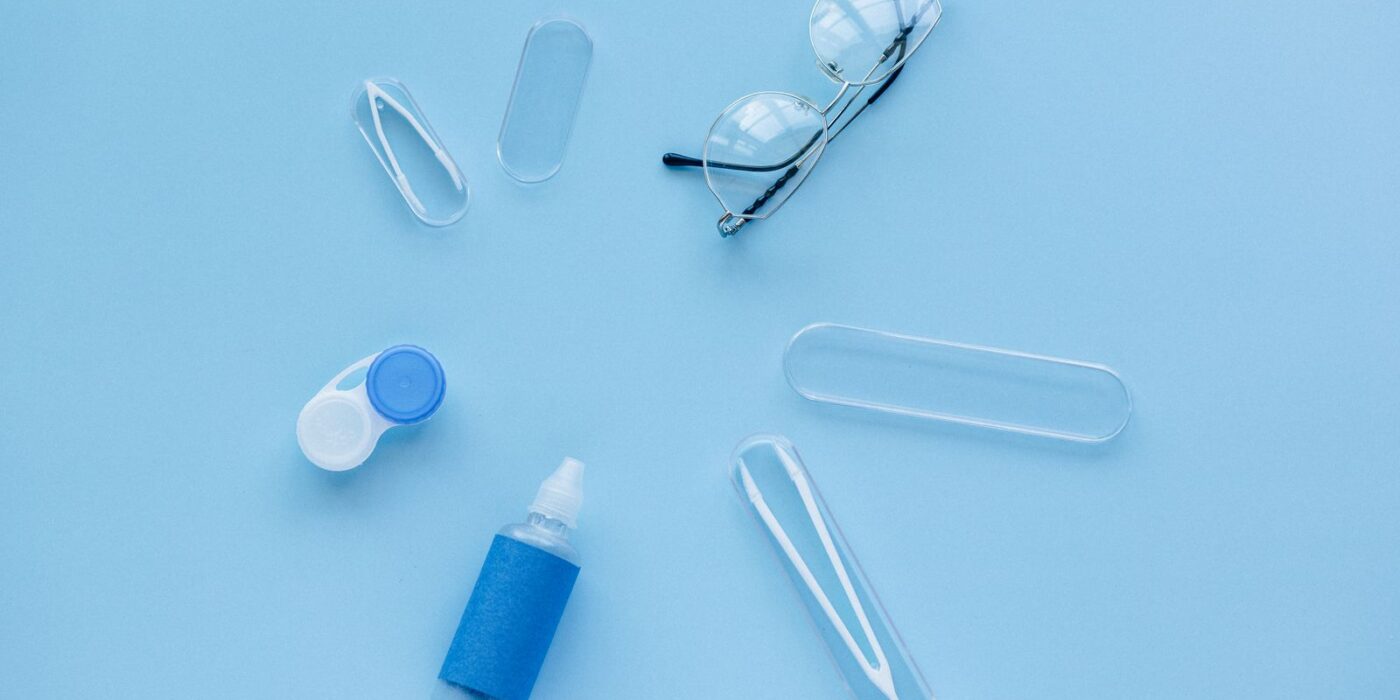
Flat lay of an unlabeled dropper bottle, contact lens case, tweezers and eyeglasses on a light blue background
CategoriesEye Care

How to Put In Eye Drops Correctly: Step by Step

To put in eye drops, wash your hands, tilt your head back, and gently pull down your lower eyelid to make a small pocket. Squeeze one drop into that pocket without letting the tip touch your eye, then close your eye for 2 to 3 minutes and press lightly on the inner corner near your nose. If you use more than one kind of drop, wait at least 5 minutes between them.

These small steps matter. A drop that lands on your cheek, or gets washed out by the next one, is wasted medicine, and with glaucoma, every dose helps protect your sight.

What should you do before putting in eye drops?

  • Wash your hands with soap and water, then dry them.
  • Check the label. Make sure it is the right medicine for the right eye and that it has not expired. Shake the bottle only if the label says to.
  • Look at the tip. MedlinePlus advises checking that the dropper tip is not chipped or cracked.
  • Take out contact lenses unless the drops are made for use with lenses.
  • Pick a steady position. Sitting with your head tipped back, standing at a mirror, or lying flat on a bed all work.

How do you put in eye drops, step by step?

The method is the same for lubricating drops, antibiotic drops such as ciprofloxacin (for example Ciplox Eye Drops) prescribed for a bacterial infection, and glaucoma drops.

  1. Tilt your head back, or lie down, and look up toward the ceiling.
  2. With your index finger, gently pull your lower eyelid down to make a small pocket.
  3. Hold the bottle upside down in your other hand, close to the eye but not touching it. Resting your other fingers on your cheek or forehead keeps your hand steady.
  4. Look up and gently squeeze so that one drop falls into the pocket.
  5. Let go of the eyelid and close your eye gently. Do not squeeze it shut or blink hard.
  6. Tip your head down, as if looking at the floor, and press lightly on the inner corner of your eye for 2 to 3 minutes.
  7. Blot any liquid on your eyelid or cheek with a clean tissue.
  8. Recap the bottle tightly without wiping or rinsing the tip, then wash your hands again.

Why is one drop enough?

A typical drop from a bottle is about 25 to 50 microliters, while the surface of the eye holds only about 10 microliters, according to a review of how eye drops are absorbed. Your eye cannot even hold one full drop, so an extra drop just spills out. Use one drop unless your doctor tells you otherwise.

Why close your eye and press the inner corner?

Each eyelid has a tiny drainage opening near the inner corner. Tears and eye drops flow through it into a duct that empties into the nose and throat, which is why some people taste their drops.

Closing your eye and pressing gently on that corner slows this drainage. The medicine stays on the eye longer, and less of it reaches the bloodstream through the lining of the nose. The same review notes that pressing the corner for 3 minutes, or keeping the eyelids closed for 2 minutes, significantly lowered blood levels of eye drop medicine. This matters most for drops that can affect the rest of the body, such as the glaucoma medicine timolol.

How long should you wait between eye drops?

Wait at least 5 minutes before putting a different drop in the same eye. MedlinePlus gives this advice, and so does the US prescribing information for Lumigan (bimatoprost), a glaucoma drop. A second drop put in too soon can wash out the first before it is absorbed.

  • Ask your doctor or pharmacist which drop to use first if you are not sure.
  • Eye ointments and gels usually go in last, after your drops.

Can you put in eye drops with contact lenses?

Usually not. Take soft lenses out before using medicated eye drops unless the product says it is made for use with lenses. Many prescription drops contain a preservative called benzalkonium chloride, which soft lenses can absorb. The Lumigan label, for example, warns it may discolor soft lenses and says to remove lenses before each dose and wait 15 minutes before putting them back in.

Follow the leaflet for your own drops, since advice varies. If you are being treated for an eye infection, leave your lenses out until your eye doctor says it is safe to wear them again.

How do you keep the dropper tip clean?

The tip should never touch your eye, eyelashes, fingers, or any other surface. The Lumigan prescribing information mentions reports of bacterial keratitis, a serious infection of the front of the eye, linked to multi-dose bottles that patients had accidentally contaminated.

  • Do not wipe or rinse the tip. Tap water and tissues are not sterile.
  • Never share eye drops, even with family members.
  • Write the opening date on the bottle. Many drops must be thrown away a set time after opening; your leaflet will say how long.
  • Store drops as the label directs, out of reach of children.

What should you know about using glaucoma eye drops?

Glaucoma drops lower the pressure inside the eye by reducing fluid or helping it drain. According to the NHS, glaucoma usually causes no symptoms at first and is often found during a routine eye exam. There is no cure, but treatment such as daily eye drops can slow the damage, and regular checkups matter. Because you may feel fine, it is easy to skip doses. These habits help:

  • Use them at the same time every day, linked to a routine like brushing your teeth. Bimatoprost, for example, is used once a day in the evening, and its US label says not to use it more than once daily.
  • Know which type you use. Common options include prostaglandin analogs such as bimatoprost and latanoprost, beta blockers such as timolol, and alpha agonists such as brimonidine. Some products combine two medicines, such as Careprost Plus (bimatoprost with timolol). You can compare options, including Alphagan Eye Drop (brimonidine), on our glaucoma eye drops page.
  • Know the possible changes. The Lumigan label warns that bimatoprost can darken the skin of the eyelids and may slowly turn the iris (the colored part of the eye) browner. The iris change is likely to be permanent. Bimatoprost can also make lashes longer, thicker, and more numerous, as our Careprost vs Latisse guide explains.
  • Press the inner corner after timolol. Timolol is a beta blocker. The review above explains that beta-blocker eye drops can reach the bloodstream in amounts large enough to slow the heart rate or, in people with asthma, tighten the airways. Tell your doctor if you have asthma, COPD, a slow heartbeat, or another heart problem.
  • Do not stop on your own. If drops sting or are hard to keep up with, ask your eye doctor about other options.

You can find more options in our eye drops and eye care range. Prescription drops should always be used as your doctor directs.

When to see a doctor

Call your eye doctor or get urgent care if you notice:

  • Sudden, intense eye pain with a red eye and blurred vision, which can mean a sudden rise in eye pressure.
  • Sudden vision loss, a shadow over part of your vision, or a burst of new floaters or flashes.
  • A painful red eye, light sensitivity, or blurry vision while you wear contact lenses.
  • Swelling, itching, or redness that gets worse after starting a new drop. Get emergency help for swelling of the face or throat or trouble breathing.
  • An eye infection that is not improving after a few days of treatment.
  • Wheezing, dizziness, or a very slow pulse while using timolol or another beta-blocker drop.

Frequently asked questions

How many drops should I put in my eye?

One drop, unless your doctor tells you differently. Your eye cannot hold even one full drop, so a second drop mostly runs out.

What if I am not sure the drop went in?

If you felt it land on your eye, assume it went in. If you are sure it landed on your eyelid or cheek, try once more. Lying down or using a mirror can make it easier to aim.

Should I blink after putting in eye drops?

No. Close your eye gently for 2 to 3 minutes instead. Blinking hard or squeezing your eyelids can push the medicine out.

Why can I taste my eye drops?

Drops drain through a small duct at the inner corner of the eye into the nose and throat. Pressing gently on that corner after each drop cuts down the taste and how much medicine reaches the rest of your body.

This article gives general information and does not replace advice from your doctor or pharmacist. Prescription eye drops, including glaucoma and antibiotic drops, should be used under a doctor’s care and exactly as prescribed.

Close-up of soapy hands being washed under a running faucet over a stainless steel sink
CategoriesEye Care

Pink Eye: Bacterial, Viral or Allergic? How to Tell

Pink eye is usually caused by a virus, bacteria or an allergy, and the discharge and the itch give the strongest clues. Thin, watery discharge during a cold points to a virus, thick pus that makes the lids stick together points to bacteria, and intense itching in both eyes points to an allergy. Only bacterial pink eye is helped by antibiotic drops; most viral pink eye clears up on its own, and allergic pink eye eases with allergy drops and by avoiding the trigger.

Pink eye, or conjunctivitis, means the conjunctiva is inflamed. That is the thin, clear layer that covers the white of the eye and lines the inside of the eyelids. The eye looks pink or red, feels gritty or burning, and may water or make discharge. Smoke, chemicals, a loose eyelash, or contact lenses worn too long or not cleaned properly can cause it too.

Pink eye bacterial vs viral vs allergic: how can you tell them apart?

No single sign is certain, and a doctor may need to look at your eye to be sure. Still, each type tends to follow a pattern, as the CDC’s pink eye symptom guide describes.

ViralBacterialAllergic
DischargeThin and wateryThick pus; the lids may stick togetherMostly watery tears
Eyes affectedOften starts in one eye and spreads to the other within daysOne or bothUsually both
Other cluesA cold, flu or other respiratory infectionSometimes comes with an ear infectionStrong itching, puffy lids, sneezing, itchy nose; sometimes asthma symptoms
Contagious?Yes, veryYes, veryNo
How long it lastsUsually 7 to 14 days, sometimes 2 to 3 weeks or moreMild cases often 2 to 5 days, up to 2 weeksFlares whenever you meet the trigger
What helpsTime, cool compresses, artificial tearsAntibiotic drops or ointment when a doctor advises themAvoiding the trigger, antihistamine eye drops

Irritant pink eye, from smoke, dust, fumes or a loose eyelash, can cause watery eyes and some mucus. A chemical splash is an emergency: flush the eye right away with cool, clean tap water for at least 15 minutes and get medical help.

Is pink eye contagious?

Viral and bacterial pink eye spread easily from person to person. The germs travel on hands that touch the eyes, and on shared towels, pillowcases, makeup and eye drops.

Allergic and irritant pink eye are not contagious. You cannot catch an allergy from someone else’s eyes.

Ask your doctor when it is OK to go back to school or work.

Do you need antibiotic eye drops for pink eye?

Only if the cause is bacterial. As the CDC’s treatment advice points out, antibiotics do not work against viruses, so they will not speed up viral pink eye. A few viral types, such as those caused by the herpes simplex virus or the virus behind chickenpox and shingles, need antiviral treatment from a doctor.

Mild bacterial pink eye often gets better without treatment. Antibiotic drops or ointment can shorten the illness, lower the chance of complications and help stop the spread. Doctors are more likely to prescribe them when there is pus, when your immune system is weakened, or when certain bacteria are suspected.

Common choices include azithromycin and ciprofloxacin drops, among others. The US label for azithromycin drops (AzaSite) gives a 7-day course: 1 drop in the affected eye twice a day, 8 to 12 hours apart, for 2 days, then once a day for 5 days. The AzaSite prescribing information lists eye irritation as the most common side effect, in about 1 to 2% of people. Ciprofloxacin drops follow a different schedule, so always go by your own prescription.

If your doctor prescribes azithromycin, Zaha eye drops contain the same active ingredient as AzaSite; they are made and licensed in India and start from $13.75. Ciplox eye drops contain ciprofloxacin and start from $4, and Azithral eye ointment is an azithromycin ointment from $10. These are prescription medicines, so use them only when a doctor has confirmed a bacterial infection, and call your doctor if you are not better after 24 hours on antibiotics.

To put in drops safely:

  • Wash your hands first.
  • Tilt your head back, gently pull down the lower lid and let one drop fall into the pocket.
  • Do not let the tip touch your eye, lashes, fingers or any surface.
  • Do not use the same bottle for an infected eye and a healthy eye.
  • Use the drops for as long as your prescriber says, even if the eye looks better sooner.

What helps allergic pink eye?

The first step is to avoid what sets it off as much as you can, such as pollen, pet dander, dust mites or mold. Stay away from smoke, including secondhand smoke, and try not to touch or rub your eyes.

Cool compresses and artificial tears (lubricating drops) can soothe the eyes. Antihistamine eye drops can relieve the itching. Ketotifen drops are sold on US drugstore shelves; their Drug Facts label is for adults and children 3 and older: 1 drop in the affected eye twice a day, every 8 to 12 hours, no more than twice a day. Children under 3 should see a doctor first. Stop and see a doctor if the itching gets worse or lasts more than 72 hours, or if you notice eye pain, redness or changes in vision.

Decongestant (redness-relief) drops can sometimes dry the eyes, and using them for more than 5 days can cause rebound redness. If drugstore products are not enough, see a doctor. Other allergy drops are available by prescription, and mild steroid drops are sometimes prescribed for severe reactions, but only after an eye doctor has examined your eyes.

If your itchy eyes come with a stuffy, runny nose, our guide to nasal sprays for allergies explains how steroid sprays work and how to use them.

How do you stop pink eye from spreading?

  • Wash your hands with soap and water for at least 20 seconds, especially before and after cleaning around your eyes or putting in drops or ointment. If you have no soap, use a hand sanitizer with at least 60% alcohol.
  • With clean hands, wipe discharge away with a clean, wet washcloth or a fresh cotton ball, then throw the cotton ball away and wash your hands again.
  • Avoid touching or rubbing your eyes with your fingers.
  • Wash washcloths, towels, pillowcases and sheets often in hot water with detergent.
  • Do not share pillows, washcloths, towels, eye drops, eye or face makeup, or makeup brushes.
  • Stay out of swimming pools until the infection has cleared.

Can you wear contact lenses with pink eye?

No. Take your lenses out and wear glasses until your eye doctor says it is OK to start again. The AzaSite label also tells people with signs of bacterial pink eye not to wear contacts. Throw away disposable lenses and other disposable products you used while your eye was infected, and clean reusable lenses, glasses and cases as directed.

If you use ketotifen allergy drops, take your lenses out first and wait at least 10 minutes before putting them back in. Do not use these drops to treat irritation caused by the lenses themselves.

A red eye in a contact lens wearer needs extra care, because it can be bacterial keratitis, an infection of the cornea, the clear front window of the eye. The CDC’s keratitis guidance says that with eye pain, redness, blurry vision, light sensitivity, watery eyes or discharge, you should remove your lenses and call your eye doctor right away. Left untreated, bacterial keratitis can lead to vision loss or even blindness.

When to see a doctor

Most pink eye is mild, but get medical care promptly if you have:

  • Eye pain, rather than just a gritty feeling
  • Sensitivity to light
  • Blurred vision that does not clear when you blink or wipe away discharge
  • Intense eye redness
  • A red, painful eye while wearing contact lenses
  • A weakened immune system
  • A newborn baby with any signs of pink eye (see a doctor right away)
  • Symptoms that get worse or do not improve, including bacterial pink eye that is not better after 24 hours on antibiotics

Our eye care section lists other eye medicines, but any of these red flags needs an eye exam first.

Frequently asked questions

Does pink eye go away on its own?

Often, yes. Viral pink eye usually clears in 1 to 2 weeks, and mild bacterial pink eye often clears in 2 to 5 days. Allergic pink eye usually eases when you avoid the trigger. See a doctor if it is getting worse or not improving.

Can I use leftover antibiotic eye drops from last time?

It is better not to. Antibiotics do nothing for viral or allergic pink eye, an opened bottle can become contaminated, and eye drops should never be shared with someone else.

Why did my pink eye spread to the other eye?

Viral pink eye usually begins in one eye and spreads to the other within days. Washing your hands often and not touching or rubbing your eyes helps. Allergic pink eye usually affects both eyes.

Are steroid eye drops OK for pink eye?

Only if an eye doctor prescribes them after an exam. Steroids can make some eye infections worse, so do not use steroid or steroid-combination drops on your own.

This article gives general information only and is not medical advice. Prescription medicines, including antibiotic and steroid eye drops, should be used under a doctor’s care.

A white unlabeled eye drop bottle on a light surface with a pair of round glasses blurred in the background
CategoriesEye Care

Dry Eyes: Causes, Symptoms and Treatments That Help

Dry eyes happen when your eyes do not make enough tears, or when the tears you make dry up too fast. Long hours on screens, getting older, contact lenses and blocked oil glands in the eyelids are some of the most common causes. For most people, dry eye treatment starts at home with preservative-free artificial tears, warm compresses and a few habit changes, and prescription drops can help when that is not enough.

What does dry eye feel like?

Dry eye is common and usually not serious, but it can be uncomfortable. Typical symptoms include:

  • Eyes that feel gritty, scratchy or as if something is stuck in them
  • Burning, itching, soreness or redness
  • Blurry vision that clears when you blink
  • Sensitivity to light
  • Watery eyes

Watery eyes surprise many people, but dryness makes the eye uncomfortable, and that can trigger a rush of extra tears that does not fix the problem.

What causes dry eyes?

Tears have a watery layer, a thin mucus layer and an oily top layer that slows evaporation. A problem with any of them can lead to dry eye. The NHS lists several things that make it more likely:

  • Being over 50
  • Wearing contact lenses
  • Looking at screens for long stretches without a break
  • Air conditioning, indoor heating, wind, dust or smoke
  • Smoking or drinking alcohol
  • Some medicines, such as certain antidepressants and blood pressure medicines
  • Conditions such as blepharitis (inflamed eyelids), Sjögren’s syndrome and lupus

Some cold and allergy medicines can also play a part, as can isotretinoin for acne and previous eye surgery. If seasonal allergies play a part, our guide to nasal sprays for allergies covers one common way to manage hay fever.

Eye drops used every day for other conditions can irritate the eye surface over time, often because of their preservative. If you use glaucoma eye drops, do not stop them, since they protect your sight; ask your eye doctor whether a preservative-free version could help. Bimatoprost eyelash treatments such as Latisse also list dry eye symptoms among their most frequent side effects, as our Careprost vs Latisse comparison explains. Never stop a prescribed medicine without medical advice.

Why do dry eyes get worse with age?

Dry eye becomes more common after 50. Hormone changes can lower tear production, and menopause is one of the known risk factors. The eyelid oil glands also tend to work less well with age, so tears evaporate faster. Age-related dry eye usually needs ongoing care rather than a one-time fix.

Can screen time cause dry eyes?

Yes. When you concentrate on a phone or computer, you blink much less often. Each blink spreads fresh tears and squeezes a little oil from the glands along your eyelids. A 2023 review of eyelid gland problems explains that blinking less during computer use means these glands are emptied less often, which can help clog them. Simple habits help:

  • Follow the 20-20-20 rule: every 20 minutes, look at something about 20 feet away for 20 seconds.
  • Take short breaks to blink fully a few times.
  • Set your screen just below eye level.
  • Keep fans, heaters and car vents from blowing on your face, and try a humidifier in dry rooms.

Do contact lenses cause dry eyes?

They can. A lens sits right in the tear film, and wearing lenses is a well-known risk factor for dry eye. These steps often help:

  • Switch to glasses when your eyes feel dry, and plan some lens-free days.
  • Do not sleep in lenses unless your eye doctor says they are made for overnight wear.
  • Use only drops labeled as safe with contact lenses, or remove your lenses first.
  • Ask your eye doctor whether a different lens type or cleaning solution might suit you better.

A red, painful eye in a contact lens wearer can be a sign of infection. Take the lenses out and get checked the same day.

What is meibomian gland dysfunction?

Meibomian gland dysfunction (MGD) is a very common cause of dry eye. Tiny meibomian glands in your eyelids release oil onto the tear film each time you blink. In MGD, the glands get blocked or the oil turns thick, so tears evaporate too quickly. MGD often goes hand in hand with blepharitis and rosacea. Signs include red or crusty eyelid edges, burning and blurry vision that clears when you blink.

How to do a warm compress

Warmth softens the thickened oil so it can flow again, and eye specialists use warm compresses, lid cleaning and gentle massage as the first treatment for MGD:

  1. Wash your hands. Soak a clean washcloth in warm, not hot, water and wring it out.
  2. Hold it over your closed eyelids for about 5 to 10 minutes, rewarming it when it cools.
  3. Gently massage your eyelids for about 30 seconds, pressing toward the lashes.
  4. Wipe along the lash line with a clean cotton pad dampened with warm water.
  5. Repeat twice a day, and keep going even after your eyes feel better, because MGD is usually a long-term condition.

Which artificial tears should you use for dry eye?

Lubricating eye drops, often called artificial tears, are the first step for most people. MedlinePlus advises using them at least 2 to 4 times a day and changing your approach if they have not helped after a couple of weeks. When choosing:

  • Preservative-free drops come in single-use vials or special bottles. Some people react to the preservatives in standard drops, so preservative-free versions are the better choice if you use drops often, wear contacts or have sensitive eyes. MedlinePlus notes they can be used as often as every 2 hours.
  • Gels and ointments last longer but blur your vision for a while, so they suit bedtime, especially if your eyes stay slightly open while you sleep.
  • Redness-relief drops are not artificial tears. They narrow blood vessels to whiten the eye, are meant only for short-term relief of minor redness, and overuse can make redness worse.

Do not let the dropper tip touch your eye or fingers, and throw away single-use vials after each use.

What prescription treatments help dry eye?

If home care is not enough, an eye doctor can check your tear production and tear film, then suggest a next step:

  • Cyclosporine eye drops (Restasis and others) help increase tear production when inflammation is holding it back. The US label for Restasis gives one drop in each eye twice a day, about 12 hours apart. Burning was the most common side effect, in 17% of people in studies. Remove contact lenses first and wait 15 minutes before putting them back in, and leave 15 minutes between cyclosporine and artificial tears.
  • Lifitegrast (Xiidra) is another twice-daily prescription drop for dry eye disease. An odd taste after using it is a common side effect.
  • Steroid eye drops may be used briefly to calm a flare. Courses are kept short because long-term use can raise eye pressure and cause cataracts.
  • Oral antibiotics such as doxycycline, or azithromycin for people who cannot take it, may be prescribed for stubborn MGD, especially with rosacea, to reduce bacteria and inflammation along the eyelid edge.
  • Punctal plugs are tiny plugs placed in the tear drainage ducts so your tears stay on the eye longer.
  • In-office treatments such as thermal pulsation or intense pulsed light may help MGD that does not improve with warm compresses.

These options need an eye exam first, because the right choice depends on the cause. You can browse the prescription eye medicines we carry in our Eye Care section.

When to see an eye doctor

See an optometrist or ophthalmologist if symptoms last more than a few weeks despite home care, keep coming back, or affect reading, driving or work. Contact a doctor the same day if you have:

  • A red, painful eye, especially if you wear contact lenses
  • Discharge, flaking or a sore on the eye or eyelid
  • A bulging eye or an eyelid that starts to droop or change shape
  • Dry eyes with a dry mouth and joint pain or swelling, which can point to Sjögren’s syndrome

Go to the emergency room for any sudden change in vision (such as wavy lines, flashes or vision loss), pain when looking at light, a red eye with a severe headache and nausea, an eye injury, or something stuck in your eye.

Frequently asked questions

Can dry eyes go away on their own?

Mild dryness from a dry room or a long screen session often settles once you rest your eyes and remove the trigger. Dry eye linked to age, MGD or a medical condition usually needs ongoing care.

How often can I use artificial tears?

Follow the package directions. Many people use preserved drops 2 to 4 times a day; if you need them more often, switch to preservative-free drops.

Can I use eye drops while wearing contact lenses?

Only drops labeled as safe for contact lenses. For other drops, take your lenses out first and follow the label on when to put them back in.

Do warm compresses really help dry eyes?

They help most when blocked eyelid oil glands are part of the cause, and they work well when done every day with gentle lid massage.

This article gives general information only and is not medical advice. Prescription eye medicines should be used under a doctor’s care, so talk to your eye doctor or pharmacist before starting, stopping or changing any eye drop.

Add to cart