
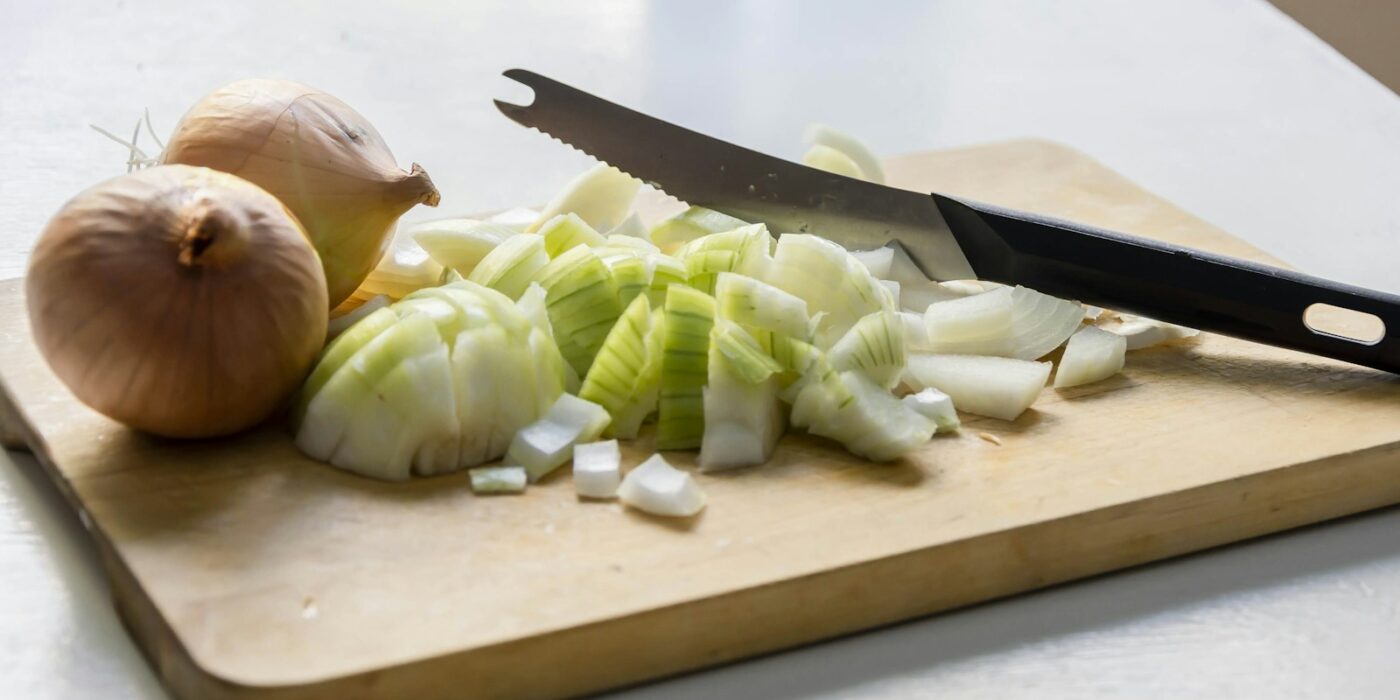
The most common IBS trigger foods are high-FODMAP foods such as onions, garlic, wheat, beans, milk, some fruits and sugar-free sweeteners, along with fatty or spicy meals, caffeine, alcohol and fizzy drinks. Habits matter too: stress, skipped meals and eating in a rush can all set off a flare. Triggers vary from person to person, so the aim is to find your own, not to cut out every food on a list.
Why do some foods trigger IBS symptoms?
Irritable bowel syndrome (IBS) does not damage the intestines, but it makes the gut extra sensitive. Signals between the brain and the bowel can make it react strongly to everyday things like gas or a large meal, so a food that gives one person a little gas can give someone with IBS cramps, bloating or urgent diarrhea.
Many trigger foods are rich in FODMAPs: fermentable oligosaccharides, disaccharides, monosaccharides and polyols. These short-chain carbohydrates are poorly absorbed in the small intestine. In the colon, bacteria ferment them into gas, and they also draw in water, which can mean pain, bloating and loose stools.
What are the most common IBS trigger foods?
According to MedlinePlus, the main FODMAP groups and typical sources are:
- Fructans: garlic, onions, and breads, pasta and cereals made from wheat, rye or barley
- Fructose: honey, high-fructose corn syrup, dried fruit and some fresh fruits such as mango and watermelon
- Galactans: beans, lentils, chickpeas and other legumes
- Lactose: milk, ice cream, yogurt and soft cheeses such as cottage cheese
- Polyols: apples, pears, cherries, avocados and sugar alcohols such as sorbitol and xylitol, common in sugar-free gum and candy
Watch for hidden garlic and onion in garlic salt, garlic or onion powder, marinated meats, sausages and other processed meats. Cabbage, cauliflower, Brussels sprouts, asparagus and button mushrooms are also high in FODMAPs. Still, not everyone reacts to every item here, and small portions are often fine, which is why testing your own triggers matters more than following a generic list.
What is the low FODMAP diet, and how does it work?
The low FODMAP diet is a short-term elimination plan, not a diet for life. It has three steps:
- Elimination: swap high-FODMAP foods for lower-FODMAP choices for about 6 weeks and see whether symptoms settle.
- Reintroduction: add foods back one at a time and note which ones bring symptoms back.
- Personalization: limit only the foods that bother you and return to the ones you tolerate.
Lower-FODMAP choices include rice, oats, quinoa, potatoes, carrots, spinach, zucchini, bell peppers, blueberries, strawberries, grapes, eggs, plain meat and fish, lactose-free milk and aged hard cheeses. Because the diet is strict, it is easier and safer with a doctor or registered dietitian who can make sure you still get enough nutrients. It is meant for people with a confirmed IBS diagnosis, and it does not help everyone.
Does fiber help or hurt IBS?
It depends on the type. Soluble fiber dissolves in water and forms a soft gel, and it can ease constipation or diarrhea for some people. Good sources are oats, psyllium husk, ground flaxseed (linseed), carrots and peeled potatoes. Insoluble fiber, found in wheat bran, whole grains, nuts and seeds, adds bulk but can worsen bloating and pain.
In a primary care trial of 275 adults with IBS, people taking psyllium were more likely than those on placebo to report adequate relief in the first two months, while people taking bran were the most likely to drop out because their symptoms got worse. Whatever fiber you add, increase it slowly and drink plenty of fluids.
Do caffeine, alcohol and fatty foods make IBS worse?
They can. Caffeine, alcohol and spicy food stimulate the gut, and large, fatty or fried meals often bring on cramps and urgency. The NHS suggests:
- No more than 3 cups of coffee, tea or other caffeinated drinks a day
- Cutting back on alcohol and fizzy drinks
- Limiting fatty, spicy and processed foods, and products sweetened with sorbitol
- No more than 3 portions of fresh fruit a day, with one portion being about 80 grams (roughly 3 ounces)
- Drinking around 1.5 liters (about 50 ounces) of fluid a day, such as water or herbal tea
How you eat counts too. Try not to skip or delay meals, eat slowly, and choose smaller meals more often instead of a few large ones.
Can stress make IBS symptoms worse?
Yes. The gut and brain are in constant two-way contact, and stress or anxiety can make the bowel more sensitive and more likely to cramp. Some people notice flares around deadlines or big life changes even when their diet has not changed.
Regular exercise such as walking or yoga, enough sleep and relaxation techniques like slow breathing may help. Psychological therapy can also help some people, and doctors sometimes prescribe a low dose of a tricyclic antidepressant to ease ongoing gut pain.
How do you keep a food and symptom diary?
For two to four weeks, write down everything you eat and drink with rough amounts and times, any symptoms with a 0 to 10 severity score, your bowel movements, and your stress, sleep and alcohol. Note any medicines or supplements too.
Look for foods or situations that come before symptoms more than once, and bring the diary to your doctor or dietitian. If you find yourself avoiding many different foods, talk to your doctor rather than cutting out more on your own.
How do triggers and treatment differ in IBS-D and IBS-C?
IBS is grouped by the main bowel pattern: IBS with diarrhea (IBS-D), IBS with constipation (IBS-C), or mixed IBS (IBS-M), where the two alternate.
| IBS-D | IBS-C | |
|---|---|---|
| Main bowel pattern | Loose, frequent stools and sudden urges | Hard stools, straining and a feeling of not emptying fully |
| Diet changes that may help | Cut down on whole grains, nuts and seeds; limit caffeine, alcohol and sorbitol; drink fluids to avoid dehydration | Slowly add soluble fiber such as oats, psyllium and ground flaxseed; drink plenty of fluids |
| Medicine options a doctor may discuss | Loperamide; prescription rifaximin | Fiber supplements or laxatives; prescription linaclotide, lubiprostone or plecanatide |
For cramps and bloating in any type, doctors may suggest an antispasmodic such as dicyclomine, or peppermint oil capsules. Some people find probiotics help; the NHS suggests trying one for about 4 weeks. Check with your doctor or pharmacist before taking anything new.
Where does rifaximin fit in IBS-D treatment?
Rifaximin is a prescription antibiotic, sold in the US as Xifaxan, that is labeled for IBS-D in adults. According to the FDA label, the dose is 550 mg three times a day for 14 days, with or without food, and the course can be repeated up to two more times if symptoms come back. The most common side effects in IBS-D studies were nausea and a rise in the liver enzyme ALT.
Tell your doctor if you have severe liver disease, take warfarin or cyclosporine, or have reacted to a rifamycin antibiotic such as rifampin. Like nearly all antibiotics, it can lead to C. difficile diarrhea, so call your doctor if diarrhea gets worse during or after treatment.
Rifagut 550 mg by Sun Pharma contains the same active ingredient as Xifaxan and is made and licensed in India; it is available from $105. Our guide to rifaximin for IBS-D explains how it works and how it is dosed. Use it only after a doctor has confirmed IBS-D and prescribed it.

When should you see a doctor about IBS symptoms?
See a doctor if bowel symptoms last more than about 4 weeks or diet changes and pharmacy medicines are not helping. There is no single test for IBS, so other conditions need to be ruled out first. Get medical care promptly if you have:
- Blood in your stool or bloody diarrhea
- Losing a lot of weight without trying
- Belly pain that wakes you up at night, or bowel symptoms that first start at age 50 or older
- A hard lump or swelling in your belly
- Shortness of breath, a pounding heartbeat or unusually pale skin, which can be signs of anemia
- Diarrhea that gets worse during or after a course of antibiotics
These symptoms are not typical of IBS and need to be checked.
Frequently asked questions
Is coffee bad for IBS?
Coffee is low in FODMAPs, but its caffeine stimulates the gut and can trigger urgency or diarrhea in some people. You may not need to give it up; the NHS suggests no more than 3 caffeinated drinks a day.
Can I eat dairy if I have IBS?
Lactose is a FODMAP, so regular milk, ice cream and soft cheeses can trigger symptoms. Lactose-free milk and yogurt and aged hard cheeses such as cheddar are lower in FODMAPs and often easier to tolerate.
How long does it take to find my trigger foods?
On a low FODMAP plan, the elimination step usually lasts about 6 weeks, followed by several more weeks of adding foods back one at a time. A dietitian can make the process easier and help keep your diet balanced.
Does rifaximin cure IBS-D?
No medicine cures IBS. Rifaximin is taken as a 14-day course, and symptoms can return; the label allows up to two repeat courses. Diet, stress management and other treatments remain part of long-term care.
This article gives general information only and is not medical advice. IBS symptoms can overlap with other bowel conditions, so get a proper diagnosis from a doctor, and use prescription medicines such as rifaximin only under a doctor’s care.
Shop the products in this article
Browse all Rifaximin (Generic Xifaxan) products →
Prescription medicines: check with your doctor or pharmacist that a treatment is right for you before ordering.