
Tretinoin, adapalene and retinol all belong to the retinoid family, the vitamin A ingredients used on skin, but they differ a lot in strength and in how you get them. In the US, tretinoin is the strongest and needs a prescription, adapalene 0.1% gel is sold over the counter for acne, and retinol is a milder cosmetic ingredient aimed at early signs of aging. For acne, adapalene or tretinoin are the usual picks; for fine wrinkles, tretinoin has the strongest evidence and retinol is the gentlest place to start.
How are tretinoin, adapalene and retinol different?
All three speed up skin cell turnover, which helps keep pores clear and, over months, can make skin look smoother. The difference is how directly each one works.
- Tretinoin is retinoic acid, the active form of vitamin A that skin cells respond to. It needs no conversion, so it acts directly and strongly.
- Adapalene is a lab-made, retinoid-like drug developed for acne. It targets retinoid receptors more selectively than tretinoin and tends to be gentler on the skin.
- Retinol is a form of vitamin A that your skin must convert in two steps, first to retinaldehyde and then to retinoic acid, before it does anything. A review of retinoids for skin aging describes retinol as about 20 times less potent than tretinoin and much less irritating.
| Tretinoin | Adapalene | Retinol | |
|---|---|---|---|
| What it is | Retinoic acid (active vitamin A) | Synthetic retinoid-like drug | Vitamin A that skin converts to retinoic acid |
| US status | Prescription only | 0.1% gel over the counter; 0.3% gel and other forms by prescription | Cosmetic ingredient, sold freely |
| Common strengths | Creams 0.025%, 0.05%, 0.1%; gels 0.01%, 0.025%; microsphere gels 0.04% to 0.1%; 0.02% cream for fine wrinkles | 0.1% and 0.3% | Varies; often not stated on the label |
| Main use | Acne; fine wrinkles (0.02% cream) | Acne, ages 12 and up | Texture, tone and fine lines |
| Irritation | Highest | Moderate | Lowest |
| Time to see results | Acne: often 6 weeks or more; wrinkles: 3 to 6 months | Acne: up to 3 months | Gradual, over months |
Which ones need a prescription in the US?
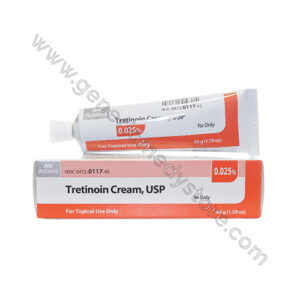
Tretinoin is prescription-only in every strength and form. US brands include Retin-A, Retin-A Micro and Renova, plus generics.
Adapalene is split. Adapalene 0.1% gel is sold over the counter: the Drug Facts label for Differin Gel 0.1% notes it was previously available only by prescription, and it covers acne in adults and children 12 and older. The stronger 0.3% gel and the cream, lotion and other forms remain prescription products.
Retinol is sold as a cosmetic ingredient in serums, creams and night moisturizers. Cosmetics do not go through drug approval, and the American Academy of Dermatology points out that labels often do not say how much retinol a product contains.
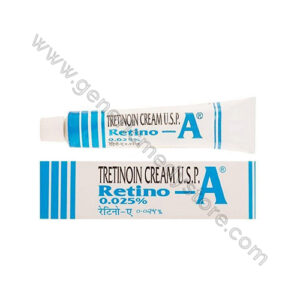
If your doctor prescribes tretinoin, Retino A Cream 0.025% contains the same active ingredient as Retin-A cream; made and licensed in India. Adaferin Gel contains adapalene, the same active ingredient as Differin; made and licensed in India. Prescription medicines like these should be used under a doctor’s care.
Featured in this article
Retino A Cream 0.025%by Janssen Pharmaceuticals, India
Starting at just $10.00
Which retinoid is strongest, and which irritates the most?
From strongest to mildest, the usual order is tretinoin, then adapalene, then retinol. You cannot compare percentages across ingredients: 0.1% adapalene is not the same as 0.1% tretinoin.
Stronger usually means more irritation. Expect some dryness, redness, peeling, burning or stinging at first. The Differin label says this irritation is most likely in the first few weeks and usually eases with continued use. In older head-to-head trials, adapalene 0.1% gel cleared acne about as well as tretinoin 0.025% gel with less irritation, although in one trial tretinoin 0.1% microsphere gel reduced blackheads and whiteheads faster.
If you have darker skin, go slowly: irritation can trigger dark marks (hyperpigmentation).
Which is better for acne, and which for wrinkles?
For acne
Adapalene and tretinoin are both proven acne medicines; retinol is not an acne treatment. They help clear blackheads, whiteheads and small pimples and help prevent new ones. For red, inflamed acne, doctors often pair a retinoid with benzoyl peroxide or a topical antibiotic such as clindamycin.
Adapalene 0.1% is a sensible first step for mild acne. Tretinoin is the stronger option when that is not enough. The Retin-A label says early results may show in two to three weeks, but more than six weeks may be needed for a clear benefit; the Differin label allows up to three months. Our guide to tretinoin for acne covers strengths and what to expect in more detail, and you can compare creams and gels in our acne treatment section.
For fine lines and sun damage
Of these three, only tretinoin has US prescription labeling for wrinkles. The Renova (tretinoin 0.02%) label describes it as an add-on for softening fine facial wrinkles in people who also follow a full skin care and sun-avoidance plan. It does not erase wrinkles or repair sun damage, and up to six months of use may be needed before effects show. Adapalene is labeled for acne only.
Retinol has smaller studies behind it, including a controlled trial that found improved fine wrinkles after 12 weeks, but far less data than tretinoin. It breaks down in light and air, so choose an opaque, airtight container. It suits sensitive skin or a mild first step.
How do you start a retinoid without irritating your skin?
- Pick one. Using more than one retinoid product at a time makes irritation more likely.
- Start slowly. Use it every other night at first, then build up to once nightly as your skin allows. Never use it more than once a day.
- Use a small amount. A pearl-sized dab, about 1/4 inch across, is enough for the whole face. Apply a thin layer at night to clean, fully dry skin, over the whole area rather than single spots, and away from your eyes, mouth and the corners of your nose.
- Moisturize. A plain, fragrance-free moisturizer that will not clog pores helps with dryness.
- Skip harsh extras. Avoid scrubs, alcohol-based toners and other drying products such as salicylic acid, sulfur or resorcinol unless your doctor suggests them. Do not wax treated skin.
- Ask about timing. If you also use benzoyl peroxide, ask your doctor or pharmacist how to time the two products.
- Be patient. Acne may look worse in the first few weeks before it improves. Give acne treatment about three months and wrinkle treatment three to six months.
If your skin gets very red or sore, ask your doctor about using it less often rather than giving up. Stop and call your doctor if irritation is severe.
Do you really need sunscreen with a retinoid?
Yes. Retinoids make skin more sensitive to sunlight, and the tretinoin and adapalene labels tell you to limit exposure to sun, sunlamps and tanning beds and not to apply them to sunburned skin. Every morning, use a broad-spectrum sunscreen with SPF 30 or higher on all exposed skin, plus a wide-brimmed hat and shade when you can. Wind and cold can also irritate treated skin.
Can you use a retinoid while pregnant or breastfeeding?
Talk to your doctor first. The Renova label says not to use it if you are pregnant or trying to become pregnant, and the Retin-A label says tretinoin should be used in pregnancy only if the benefit justifies the risk. The Differin label says to ask a doctor before use if you are pregnant or breastfeeding, and to stop and ask a doctor if you become pregnant or plan to. The American Academy of Dermatology states that retinoids should not be used during pregnancy, and it counts retinol as a type of retinoid. Retinoid pills such as isotretinoin are known to cause serious birth defects. If you are pregnant or planning a pregnancy, ask your doctor which acne options suit you.
When to see a doctor
- Deep, painful lumps or cysts, or acne that is leaving scars
- No improvement after three months of once-daily adapalene
- Severe burning, swelling or blistering where you applied the product
- Signs of an allergic reaction, such as hives, swelling of the lips or eyelids, or trouble breathing (get emergency care)
- Acne along with irregular periods or new facial or body hair, which can point to a hormone problem
- Constant facial redness or flushing, which may be rosacea rather than acne
- You are pregnant, trying to conceive or breastfeeding
Frequently asked questions
Is adapalene the same as retinol?
No. Adapalene is a retinoid-like medicine made to treat acne, while retinol is a cosmetic form of vitamin A that skin must convert before it works. Adapalene is stronger and has drug labeling for acne.
Is tretinoin stronger than adapalene?
Generally, yes, and it tends to cause more irritation. In acne trials, adapalene 0.1% worked about as well as low-strength tretinoin with less irritation.
Can I use retinol and tretinoin together?
There is usually no reason to. Tretinoin already does what retinol does, more strongly, and using both raises the chance of dryness and peeling.
Should I put a retinoid on in the morning or at night?
At night. The labels call for once-daily use, and the tretinoin labels specify the evening or bedtime. Wear sunscreen the next morning.
Why does my acne look worse after starting a retinoid?
The Differin label notes that acne may seem to get worse in the early weeks before it improves, and calls this normal. Severe irritation, swelling or pain is not, so stop and call your doctor if that happens.
This article gives general information only and is not medical advice. Prescription medicines such as tretinoin should be used under a doctor’s care; check the leaflet and ask your doctor or pharmacist before starting, stopping or combining any skin treatment.
Shop the products in this article


Browse all Acne Treatment & Medication products →
Prescription medicines: check with your doctor or pharmacist that a treatment is right for you before ordering.