
If you are wondering how to store medicines at home, the short answer is this: keep most of them in a cool, dry place at room temperature, in their original containers, and up high where children cannot see or reach them. Avoid the bathroom, the car and the spot next to the stove. A few products, such as some eye drops, need the refrigerator before opening, so the label always has the final word.
What does “store at room temperature” mean on a label?
Most labels give a range rather than a single number. The US label for Ventolin HFA, an albuterol (salbutamol) inhaler, is a typical example. It says to store the inhaler between 68°F and 77°F (20°C and 25°C), with short “excursions” allowed from 59°F to 86°F (15°C to 30°C). An excursion is a brief change, such as the drive home from the pharmacy, not a normal storage temperature.
Check the label for special rules, such as refrigeration or protection from light. Keep each medicine in its original container, which shows the name, strength and expiration date, and close the cap tightly after each use.
Why is the bathroom a bad place to keep medicines?
The bathroom cabinet is the classic spot, but steam from the shower and water from the sink make the room warm and damp. MedlinePlus warns that this heat and moisture can damage medicines, which may then weaken or go bad before the expiration date. The FDA also says a damp cabinet can make medicines less effective.
Better places include a dresser drawer, a closet shelf, a storage box with a lid, or a kitchen cabinet away from the stove, the sink and other hot appliances. Keep medicines out of direct sunlight, too. If young children live with you or visit often, choose a high cabinet you can lock or fit with a child latch.
How should you store inhalers in heat and cold?
Pressurized inhalers
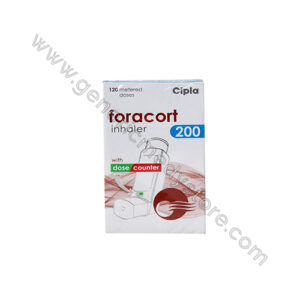
Rescue inhalers such as the Asthalin inhaler (albuterol, made and licensed in India) and combination inhalers such as Foracort (budesonide and formoterol) use a metal canister under pressure. The Ventolin HFA label says not to use or store the inhaler near heat or an open flame, warns that temperatures above 120°F (49°C) may make the canister burst, and says never to throw it into a fire. It also says to store the inhaler with the mouthpiece down.

Cold matters too: the label says the inhaler should be at room temperature before use. In winter, carry your reliever in an inside pocket, not in a cold car.
Capsule and dry powder inhalers
Dry powder is sensitive to humidity. The US label for Spiriva HandiHaler (tiotropium) says to keep each capsule sealed in its blister until just before use, store the capsules in a dry place, never freeze them, and throw away any capsule left open to air. Capsules should not be stored inside the device. The same habits suit other capsule inhalers, such as Tiova Rotacaps (also tiotropium), but check the leaflet in your own pack. For more on each device, see our guide to types of asthma inhalers.
How long are eye drops good after opening?
Often for much less time than the date on the box. That date applies to a sealed bottle. Once a bottle is open, the tip can pick up germs, and many leaflets give a separate “discard after opening” period.
Some drops also have special temperature rules. The US label for Xalatan (latanoprost, used for glaucoma) says to keep unopened bottles in the refrigerator at 36°F to 46°F (2°C to 8°C), protected from light. Once opened, a bottle may be kept at room temperature, up to 77°F (25°C), for 6 weeks. Other drops have different rules, so check yours.
- Write the date you opened the bottle on the label.
- Do not let the dropper tip touch your eye or the skin around it. The Xalatan label warns that contaminated drops can cause serious eye damage and vision loss.
- Recap the bottle right after each use, and never share eye drops.
If you use prescription drops from our eye drops and eye care range, read the storage section of the leaflet in the pack.
How do you keep medicines away from children?
The CDC’s Up and Away campaign asks families to keep every medicine where children cannot reach or see it:
- Put medicine away right after each dose, even if the next dose is due in a few hours. Do not leave it on a counter or bedside table.
- Always relock a child-resistant cap after each use.
- Keep pill organizers and plastic bags up high as well, since they often lack child-safety features.
- Treat vitamins and gummy supplements the same way.
- Ask visitors to keep purses, bags and coats that hold medicine out of reach.
- Save Poison Help, 1-800-222-1222, in your phone. It is answered 24 hours a day.
How do you protect medicines when traveling or in hot weather?
On the road and in the air
MedlinePlus advises keeping medicines in your carry-on bag when you fly, in their original bottles, with a copy of your prescriptions. For medicines that must stay cool, the CDC suggests a cooler with a gel pack and warns against putting them directly on ice. In a hotel, use a high shelf or the room safe if children are with you.
Why hot cars are a problem
A parked car in the sun can get far hotter than the air outside. MedlinePlus says not to keep medicines in the glove compartment, and the CDC lists hot cars and direct sunlight among the places to avoid. Take your medicines with you whenever you leave the car.
Medicines shipped in summer
Some labels set limits for shipping. The Xalatan label, for example, allows the bottle to be kept at up to 104°F (40°C) for no more than 8 days while it is shipped to the patient. Still, a package should not sit in a hot mailbox or on a sunny porch for hours. Our product pages give US delivery times of about 6 to 15 days, and customs can add delays, so track your package and bring it inside as soon as it arrives.
Check each item before use. MedlinePlus lists warning signs such as a change in color, texture or smell, or pills that stick together or are cracked or chipped. If something looks wrong, do not use it; ask a pharmacist and contact the seller.
When should you throw medicines away, and how?
Do not use a medicine after its expiration date. The FDA explains that expired medicines can be less effective or even risky because of chemical changes or lost strength, and a weakened antibiotic may fail to treat an infection. Throw out any medicine that looks changed, even if it is still in date. Per the Ventolin HFA label, an inhaler should be thrown away when its counter reads 000.
The FDA suggests these disposal options, in this order:
- Take-back. Use a drop-off site at a pharmacy or law enforcement office, or a prepaid mail-back envelope.
- Flush list. Flush a medicine only if it is on the FDA flush list.
- Household trash. Mix pills or liquid with used coffee grounds or cat litter, without crushing them. Seal the mixture in a bag and put it in the trash.
- Privacy. Scratch out your personal details on the empty bottle or box before you throw it away.
Never puncture an inhaler canister or throw it into a fire. The FDA suggests asking your local trash and recycling facility how to dispose of inhalers.
When to see a doctor
- If a child may have swallowed someone else’s medicine, call Poison Help at 1-800-222-1222 right away, even if you are not sure. Call 911 if the child is hard to wake, has trouble breathing or has a seizure.
- If your rescue inhaler does not seem to work after being left in heat or cold and your breathing is getting worse, seek urgent care, then replace the inhaler.
- If you get eye pain, redness, discharge or blurred vision after using eye drops, see a doctor promptly.
- If an important medicine looks damaged and you have no other supply, call your pharmacist or doctor before you skip any doses.
Frequently asked questions
Should I keep my medicines in the refrigerator?
Only if the label says so. Most tablets, capsules and inhalers are meant for room temperature, and some, such as tiotropium capsules, must not be frozen.
Can I still use medicine that was left in a hot car?
Look at it first. If it has changed in color, texture or smell, or the pills are stuck together, cracked or soft, do not use it. If it looks normal but sat in high heat for a long time, ask your pharmacist whether it is still safe to use.
Is it OK to keep pills in a weekly pill organizer?
Yes, but organizers often lack child-safety features, so keep them up high. Hold on to the original bottles so you still have the label and expiration date.
Do medicines really stop working after the expiration date?
The FDA advises against using expired medicines because they can lose strength or change chemically. Some, such as antibiotics, may then fail to work. Replace them and dispose of the old supply safely.
This article gives general information and does not replace advice from your doctor or pharmacist. Prescription medicines should be used under a doctor’s care, and the storage instructions on your own medicine’s label or leaflet always come first.
Shop the products in this article

Browse all Albuterol Inhalers (Generic Ventolin & ProAir) products →
Prescription medicines: check with your doctor or pharmacist that a treatment is right for you before ordering.