

Most flat dark marks left by acne fade on their own, and you can help them fade faster with daily sunscreen and a fading cream such as a retinoid, azelaic acid or hydroquinone, usually over several months. Pitted acne scars are different: they form when healing skin makes too little collagen, so creams can only soften mild ones, and in-office procedures such as microneedling, lasers or scar surgery work far better. The first step is working out which one you have.
Is it a dark mark or a true acne scar?
A flat spot that is only a change in color is called post-inflammatory hyperpigmentation, or PIH. On lighter skin it often looks pink or red. On medium and darker skin it is usually brown, and sometimes bluish gray. These flat marks are usually not scars at all.
A true scar changes the texture of the skin. Most acne scars are pitted: narrow, deep “ice pick” scars, round or oval “boxcar” scars, or wide, shallow “rolling” scars that make the skin look wavy. Some scars are raised instead, often on the jawline, chest or back.
| Dark marks (PIH) | Pitted scars | |
|---|---|---|
| What it is | Color change left after inflammation | A dip left when healing skin makes too little collagen |
| How it looks | Flat and smooth; pink, red, brown or gray | Dips or pits, easiest to see in side lighting |
| Fades on its own? | Usually, over months; deep pigment can take years | No |
| What helps most | Sunscreen, retinoids, azelaic acid, hydroquinone | Microneedling, lasers, peels, scar surgery, fillers |
Tip: light the spot from one side. A visible dip means a scar; a change in color alone means a mark. Many people have both.
Why does sunscreen matter so much for dark marks?
Ultraviolet light can make dark marks darker. A review of PIH treatment calls sun protection an integral part of treatment and recommends a broad-spectrum sunscreen with SPF 30 every day. The American Academy of Dermatology (AAD) suggests SPF 30 or higher and a tinted sunscreen with iron oxide, which also helps protect against visible light, another cause of dark spots.
Apply it every morning and reapply every two hours outdoors, and after swimming or sweating. This matters even more during treatment: tretinoin and hydroquinone labels both stress sun protection.
Do retinoids fade acne scars and dark marks?
Retinoids, such as tretinoin, adapalene and tazarotene, speed up skin cell turnover, which helps pigmented cells shed sooner. They also treat the acne that keeps creating new marks. In a 40-week study of Black patients with PIH, tretinoin lightened dark marks significantly more than a plain cream, although about half had some skin irritation. For mild scarring, the AAD says a retinoid can make scars less noticeable, but creams cannot fill deep pits.
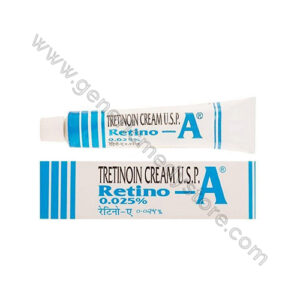
Irritation is the catch. Redness and peeling can trigger new dark marks, especially on darker skin, so dermatologists often start with a lower strength and build up. The Retin-A label says to apply tretinoin once a day at bedtime, using just enough to cover the area lightly, 20 to 30 minutes after washing. If irritation builds, it allows using it less often or pausing. A lower-strength cream such as Retino-A Cream 0.025% (from $10) is a gentler place to start, and our guide to tretinoin for acne explains each step. Ask your doctor before using a retinoid if you are pregnant, trying to get pregnant or breastfeeding.
How does azelaic acid help with dark marks?
Azelaic acid treats acne and also helps even out patchy pigment. The US prescribing information for Azelex (azelaic acid 20% cream) lists it for mild to moderate inflammatory acne, applied as a thin film twice a day to clean, dry skin. In a trial of darker-skinned adults with facial dark spots, including PIH, the 20% cream reduced pigmentation more than a plain cream over 24 weeks.
Side effects are usually mild and short-lived: the label lists itching, burning, stinging and tingling. It also asks people with darker complexions to watch for unusually light patches, which have been reported rarely. Aziderm 20% Cream (from $34) contains the same active ingredient as Azelex; it is made and licensed in India.

Is hydroquinone a good option for stubborn marks?
Hydroquinone lightens skin by reducing the melanin that pigment cells make. The same PIH review calls it the mainstay of treatment, usually at 2% to 4%. In the US, hydroquinone creams are available only with a prescription, as the FDA explains. A few rules matter:
- Labels advise testing a small amount on unbroken skin first and checking it after 24 hours. Do not continue if it itches, blisters or becomes very inflamed.
- Apply it only to the dark marks and keep it away from your eyes.
- Stop if nothing has improved after 2 months, as the label directs. Doctors often switch to a non-hydroquinone product after prolonged use.
- Hydroquinone can cause exogenous ochronosis, a gradual blue-black darkening of the skin that may be permanent. Stop and see your doctor if it appears.
- Ask your doctor first if you are pregnant or breastfeeding.
Eukroma Cream (hydroquinone, from $5) is one option. If dark patches sit evenly on both cheeks, the forehead or the upper lip without any acne, they may be melasma; our article on melasma treatment explains the difference.
Can chemical peels fade acne scars?
A chemical peel uses an acid to remove the top layers of skin in a controlled way, in strengths from mild to strong. According to the American Academy of Dermatology, peels help the skin make more collagen and elastin, which can make depressed acne scars less noticeable. A mild peel often takes 3 to 5 sessions spaced 2 to 4 weeks apart. Light glycolic or salicylic acid peels are also used for brown marks, although study results are mixed.
Peels can cause irritation and new dark marks, a bigger concern on medium and darker skin, so choose a provider who regularly treats your skin tone.
What treatments work for pitted acne scars?
Dermatologists usually start once acne is under control, since stopping breakouts helps prevent new scars. The main options are:
- Microneedling: tiny needles puncture the skin to trigger new collagen. It is often combined with radiofrequency, a chemical peel or platelet-rich plasma (PRP), and the AAD says it is safe for all skin tones.
- Laser resurfacing: lasers resurface scarred skin so new collagen can form. Settings need extra care on darker skin to avoid new dark marks or blistering.
- Scar surgery: a dermatologist can lift a scar from the tissue beneath it, or remove a deep scar and close the area with stitches or a small skin graft.
- Fillers: injected under a depressed scar to lift it. Most give temporary results lasting from 3 months to 2 years, and some are permanent.
Raised scars are treated differently, often with corticosteroid injections, laser, surgery or freezing. Combining treatments, such as microneedling with radiofrequency, can work better than either one alone. Tell your dermatologist about every acne treatment you have used in the past two years, including pills.
How long does it take to fade acne scars?
- Flat marks a few shades darker than your skin: usually fade within 6 to 12 months on their own. Treatment can clear them more quickly.
- Fading creams: results build slowly; the tretinoin and azelaic acid studies for dark marks ran for 24 to 40 weeks.
- Deep slate-blue or gray pigment: can take years to fade and may not clear fully.
- Pitted scars: do not fade on their own and can look more noticeable with age as skin loses firmness. Most procedures take several sessions, and they make scars less noticeable rather than erasing them.
When to see a doctor
- Your acne keeps leaving new scars, or you get deep, painful lumps or cysts. Treating acne early can prevent more scarring.
- A scar is raised and keeps growing beyond the original spot, which can be a sign of a keloid.
- Dark patches appear without any acne, or spread evenly across the cheeks and forehead.
- A spot changes in size, shape or color, bleeds, or will not heal; get it checked to rule out skin cancer.
- A cream causes blistering, strong burning, unusually light patches, or blue-black darkening where you apply it.
Frequently asked questions
Can acne scars go away on their own?
Flat dark or red marks usually fade with time, often within a year. Pitted scars do not; procedures are the main way to improve them.
Does picking or squeezing pimples cause scars?
It can. The NHS advises against picking or squeezing spots because this can cause scars. Picking also adds inflammation, which can make dark marks worse.
Should I choose hydroquinone or azelaic acid for dark marks?
Hydroquinone is a mainstay for stubborn brown marks, but it is meant for limited courses and needs a prescription in the US. Azelaic acid also treats active acne, and its side effects are usually mild. A dermatologist can help you decide.
Why are my acne marks red instead of brown?
It mostly depends on your skin tone: marks tend to look pink or red on lighter skin and brown or bluish gray on medium and darker skin. Either way, treating the acne and protecting your skin from the sun help, and most of these flat marks fade with time.
This article gives general information and does not replace advice from your doctor or pharmacist. Prescription medicines, including tretinoin, azelaic acid and hydroquinone creams, should be used under a doctor’s care.
Shop the products in this article


Browse all Acne Treatment & Medication products →
Prescription medicines: check with your doctor or pharmacist that a treatment is right for you before ordering.