

If you have asthma, chances are you have more than one inhaler, and it isn’t always obvious which one to use and when. Relievers, preventers, combination inhalers, rotacaps, accuhalers: the terminology can be confusing. Getting it right matters, because using the correct inhaler with the correct technique is one of the biggest factors in keeping asthma under control. This guide explains the main types of asthma inhalers, how each one works, and how to use them properly.
Why Asthma Needs Different Types of Inhalers
Asthma involves two problems happening in the airways:
- Inflammation: the airway lining becomes swollen and sensitive, reacting to triggers such as dust, pollen, smoke, cold air or exercise.
- Bronchospasm: the muscles around the airways tighten, narrowing them and causing wheezing, coughing and breathlessness.
Different inhalers target different parts of this process. That is why many people need both a quick-relief inhaler and a daily controller.
1. Reliever Inhalers (Blue Inhalers)
Reliever inhalers contain a short-acting bronchodilator, most commonly albuterol (also called salbutamol), or levalbuterol (levosalbutamol). They relax the tightened airway muscles within minutes, and their effect lasts around 4–6 hours.
Relievers are used when symptoms appear, or before exercise if your doctor recommends it. Examples include Asthalin Inhaler (albuterol) and Levolin Inhaler (levalbuterol).

Important: relievers treat symptoms but not the underlying inflammation. If you need your reliever more than two or three times a week, your asthma is probably not well controlled. Speak to your doctor about a preventer.
2. Preventer Inhalers (Inhaled Corticosteroids)
Preventer inhalers contain a low-dose inhaled corticosteroid (ICS), such as budesonide, fluticasone or beclomethasone (beclometasone). They reduce inflammation in the airways over time, making them less sensitive to triggers and lowering the risk of asthma attacks.
Key things to know about preventers:
- They must be used every day, even when you feel well.
- They don’t give instant relief. The full benefit builds over days to weeks.
- Rinse your mouth and spit after each use to reduce the risk of oral thrush and hoarseness.
- Inhaled steroid doses are far lower than steroid tablets, and are considered safe for long-term use under medical supervision.
An example is Budecort Inhaler (budesonide).
3. Combination Inhalers (Preventer + Long-Acting Reliever)
Combination inhalers pair an inhaled corticosteroid with a long-acting bronchodilator (LABA), such as salmeterol or formoterol. The LABA keeps airways open for around 12 hours, while the steroid controls inflammation. They are prescribed when a preventer alone isn’t enough, and for many people with COPD.
Popular combination inhalers include:
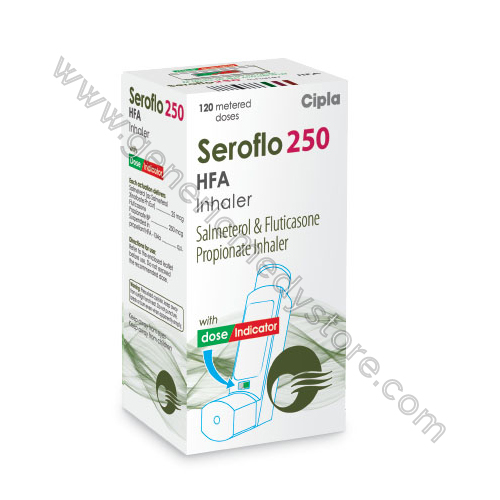
- Seroflo Inhaler: salmeterol + fluticasone in a metered-dose inhaler
- Seretide Accuhaler: salmeterol + fluticasone in a dry-powder device
- Foracort Inhaler: formoterol + budesonide
A long-acting bronchodilator should never be used on its own for asthma without an inhaled steroid. Salmeterol-based inhalers are also not meant for rescuing a sudden attack, so keep your reliever with you.
Tablets Used Alongside Inhalers
Some people also benefit from tablets added to their inhaler treatment:
- Montelukast (for example Montair 10 mg) blocks leukotrienes, chemicals that cause airway swelling. It can help with exercise-induced and allergy-related asthma. Rarely, it has been linked to mood changes, sleep problems or depression. Tell your doctor promptly if you notice any.
- Acebrophylline (for example AB Phylline 200 mg SR) is a bronchodilator that also helps thin mucus. It is prescribed in some countries for asthma and COPD.
Types of Inhaler Devices
The medicine is only half the story. The device matters too.
- Metered-dose inhaler (MDI): the classic “puffer” that releases a measured spray. It requires coordinating pressing and breathing in, and works much better with a spacer.
- Dry-powder inhaler (DPI): devices such as the Accuhaler, or rotacaps used with a Rotahaler. You breathe the powder in with a quick, deep breath. No coordination with pressing is needed, but you need enough breath strength.
How to Use a Metered-Dose Inhaler Correctly
- Remove the cap and shake the inhaler well.
- Breathe out gently, away from the mouthpiece.
- Seal your lips around the mouthpiece (or spacer).
- Start breathing in slowly and press the canister once at the same time.
- Keep breathing in slowly and deeply, then hold your breath for about 10 seconds.
- Wait about 30–60 seconds before taking a second puff, if prescribed.
How to Use a Dry-Powder Inhaler Correctly
- Load the dose (slide the lever or insert the capsule, depending on the device).
- Breathe out fully, away from the device. Moisture from your breath can clump the powder.
- Seal your lips around the mouthpiece and breathe in quickly and deeply.
- Hold your breath for about 10 seconds, then breathe out slowly.
Warning Signs of Poorly Controlled Asthma
Contact your doctor if you:
- Use your reliever more than 2–3 times a week
- Wake at night with asthma symptoms
- Find symptoms limit your daily activities or exercise
Call emergency services if your reliever isn’t helping, you’re too breathless to speak or walk, or your lips or fingertips look blue or gray.
Frequently Asked Questions
What is the difference between a reliever and a preventer?
A reliever opens the airways quickly during symptoms. A preventer reduces the underlying inflammation when used daily, lowering the chance of symptoms happening in the first place.
Can I stop my preventer when I feel better?
No. Feeling well usually means the preventer is working. Stopping suddenly can let inflammation return. Always discuss changes with your doctor.
Do I need a spacer?
Spacers are strongly recommended with metered-dose inhalers, especially for children and anyone who finds timing difficult. They help more medicine reach the lungs.
Explore our full range of asthma medicines and respiratory care products. If allergies trigger your asthma, you may also find our guide to nasal sprays for allergies helpful.
This article is for general information only and is not a substitute for professional medical advice. Always follow your doctor’s asthma action plan and speak to a healthcare professional before changing any treatment.
Shop the products in this article


Prescription medicines: check with your doctor or pharmacist that a treatment is right for you before ordering.